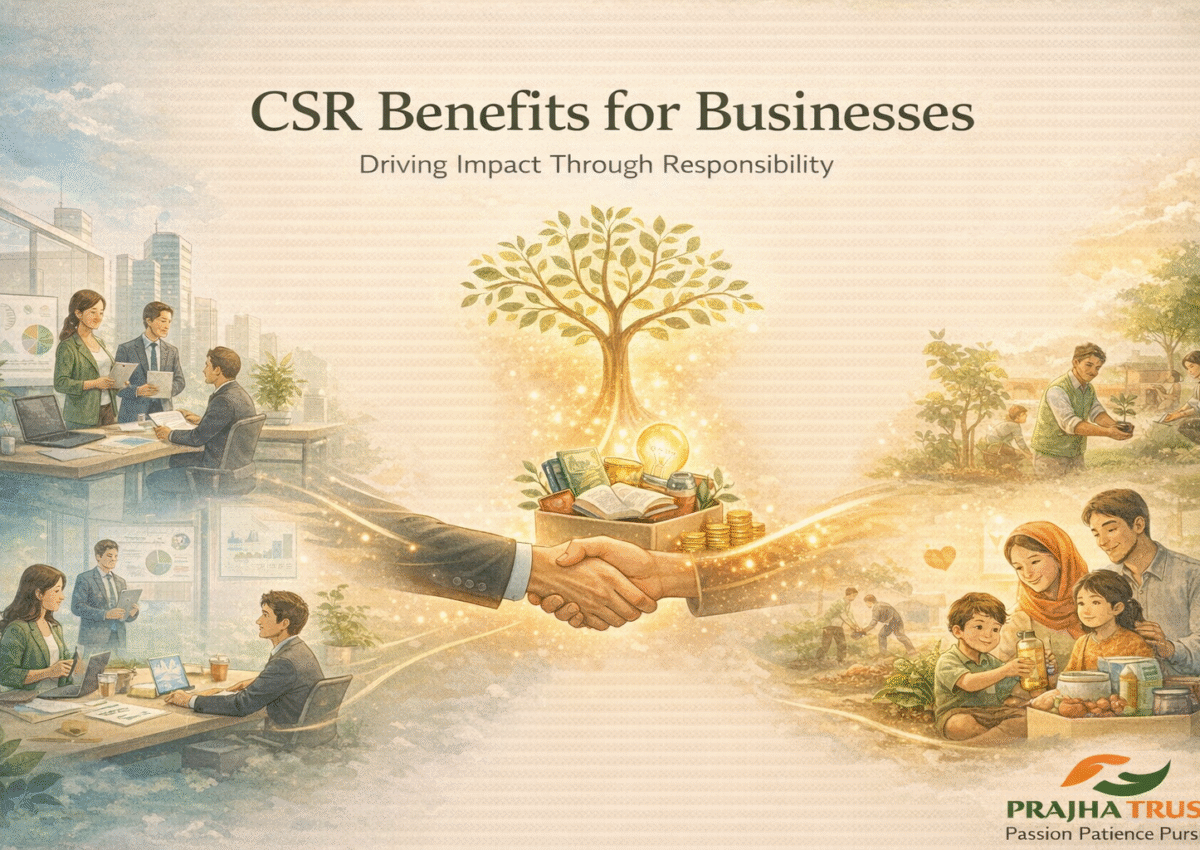
Corporate Social Responsibility (CSR) is no longer just a “good to have” initiative. It has become a core part of how modern businesses grow, build trust, and stay competitive in a crowded market.
Today’s customers, employees, and investors expect companies to do more than just generate profits—they expect them to contribute positively to society.
In this guide, we’ll break down the real benefits of CSR, not just from a social perspective, but from a business growth standpoint. More importantly, we’ll also show you how companies actually implement CSR in a practical way.
What is CSR?
Corporate Social Responsibility (CSR) refers to the initiatives and practices businesses adopt to contribute to social, environmental, and economic development.
This can include activities like supporting education, funding healthcare initiatives, environmental sustainability programs, or community development projects.
But beyond definitions, CSR is essentially about this:
How a business gives back while growing forward.
Key Benefits of CSR for Businesses
-
Builds Strong Brand Reputation
CSR helps position your business as trustworthy and responsible.
When companies actively contribute to meaningful causes, customers begin to associate the brand with positive impact. This directly influences brand perception and long-term loyalty.
In competitive markets, this emotional connection becomes a major differentiator.
-
Increases Customer Trust and Loyalty
Modern consumers prefer brands that align with their values.
When customers see your company supporting real causes—education, healthcare, environment—they are more likely to trust you and stay loyal.
CSR doesn’t just attract customers; it retains them.
-
Improves Employee Engagement and Retention
Employees want to feel that their work has meaning.
CSR initiatives give them a sense of purpose beyond their daily tasks. Whether it’s volunteering programs or company-led initiatives, employees feel more connected to the organization.
This leads to:
- higher retention
- better morale
- improved productivity
-
Creates Competitive Advantage
As highlighted in top sources like Forbes, CSR is not just ethical—it’s strategic.
Companies that adopt CSR stand out in saturated markets.
When two brands offer similar products, people choose the one that contributes to society.
-
Attracts Investors and Partnerships
Investors today look at ESG (Environmental, Social, Governance) factors.
Strong CSR initiatives signal long-term sustainability, lower risk, and better governance.
This makes your business more attractive to:
- investors
- partners
- stakeholders
-
Improves Financial Performance (Long-Term)
CSR is not a cost—it’s an investment.
Over time, it leads to:
- stronger brand equity
- better customer retention
- reduced hiring costs
- increased business opportunities
All of these contribute to long-term profitability.
-
Strengthens Community Relationships
CSR helps businesses build strong local connections.
Instead of being just a company operating in a region, you become part of the community.
This builds goodwill, trust, and long-term support.
Real Examples of CSR Impact
Many global companies like Google, LEGO, and Johnson & Johnson have successfully used CSR to build stronger brands and deeper customer relationships.
But CSR is not limited to big corporations.
Even small and mid-sized businesses are increasingly adopting CSR by partnering with NGOs and supporting local initiatives.
Also Read: CSR NGOs in Chennai for Autism & Special Needs Support
The Problem: Why Most Companies Struggle with CSR
Despite knowing the benefits, many companies don’t implement CSR effectively.
Why?
- Lack of clarity on where to start
- No on-ground execution support
- Difficulty identifying genuine initiatives
- Resource constraints
This is where most businesses get stuck.
How Companies Actually Implement CSR (Practical Approach)
Instead of building CSR programs from scratch, most companies follow a smarter approach:
They partner with NGOs already working on real impact projects.
This helps them:
- save time
- ensure transparency
- create measurable impact
- focus on business while contributing meaningfully
How Prajha Trust Helps Companies Implement CSR
If your company is looking to implement CSR initiatives, partnering with an experienced NGO can make the process seamless and impactful.
Prajha Trust works on multiple social initiatives including:
- education support
- community development
- welfare programs
Instead of figuring everything out internally, businesses can collaborate with Prajha Trust to execute CSR activities effectively.
Why This Approach Works
This is the most practical way to do CSR because:
- you don’t start from zero
- you work with proven systems
- you create real, visible impact
- you align business goals with social contribution
Final Thoughts
CSR is no longer optional—it’s a strategic growth driver.
From building brand trust to improving employee engagement and attracting customers, the benefits of CSR are clear and measurable.
But the real impact comes not just from understanding CSR—but from implementing it effectively.
And the easiest way to do that is by collaborating with organizations already creating change on the ground.