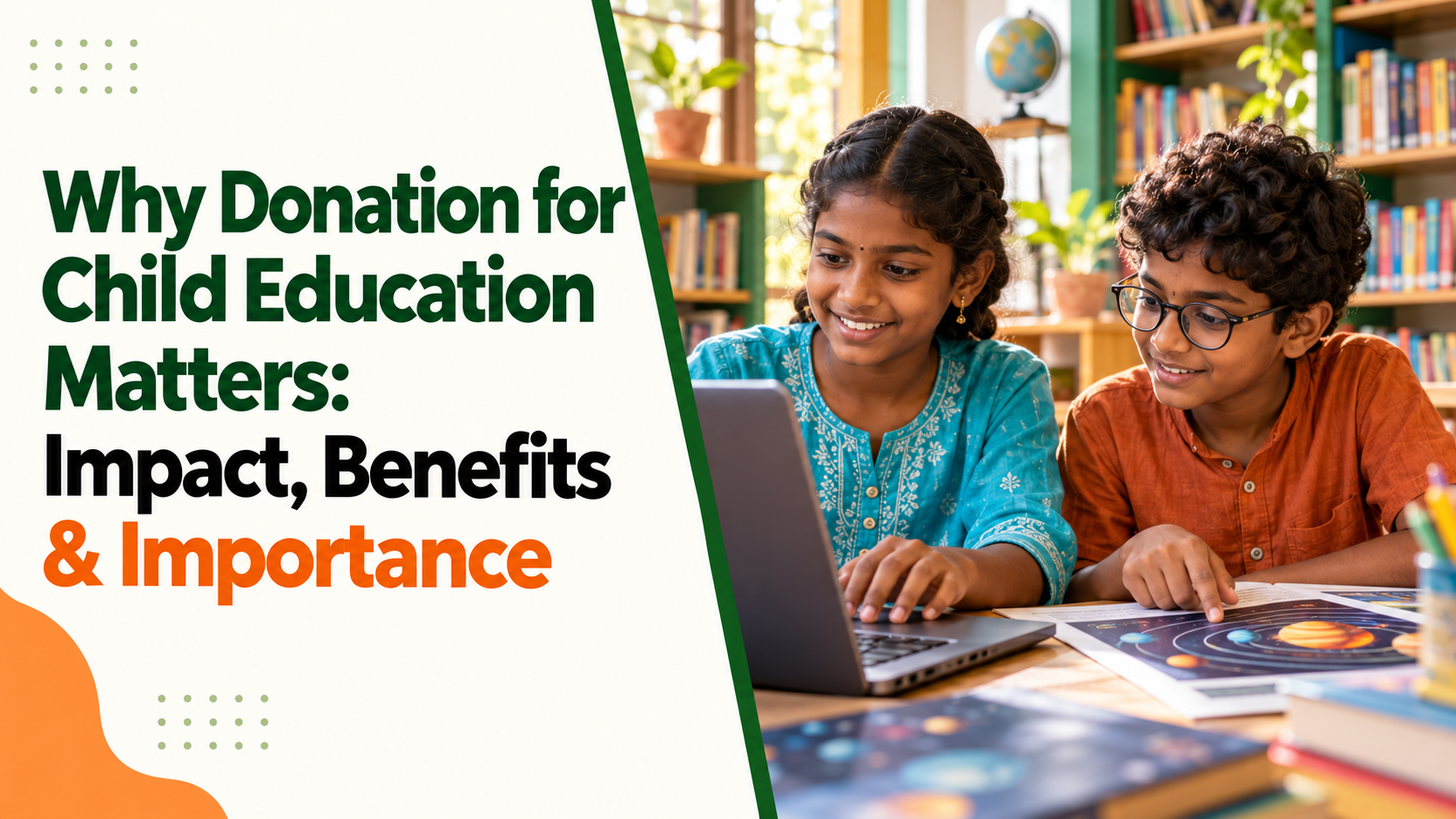
Why Donation for Child Education Matters?
Education is one of the most powerful tools for changing a child's future. Yet millions of children across India still face barriers that prevent them from accessing quality learning opportunities. Poverty, lack of school resources, family income challenges, and social inequalities continue to keep many children away from classrooms. A single educational opportunity can change the direction of a child's life. It can improve employment prospects, increase confidence, reduce poverty, and create long-term social impact. This is why donations for children's education remain one of the most meaningful ways to contribute to lasting change. When you donate for a child's education, you are not simply funding books or school fees. You are helping create opportunities that can influence an entire family, community, and future generation.Quick Answer: Why Donation for Child Education Matters?
Donation for child education matters because it helps children access learning opportunities that may otherwise be unavailable due to financial barriers. Educational donations support school enrollment, learning materials, teacher training, digital resources, nutrition programs, and skill development initiatives that improve a child's chances of building a successful future. Education also contributes to poverty reduction, gender equality, economic growth, and stronger communities.Why Education Is More Than Just Schooling
Education is often viewed as attending school and passing exams. In reality, education provides children with the skills needed to navigate life successfully. Quality education helps children:- Develop critical thinking skills
- Improve communication abilities
- Build confidence and self-esteem
- Gain digital literacy
- Improve future employment opportunities
- Understand health and social issues
- Participate actively in society
Why Do Schools Ask for Donations?
One common question people ask is:Why do schools ask for donations?
Schools often ask for donations because government funding or tuition fees alone may not fully cover educational needs. Donations help bridge funding gaps and support improvements that directly benefit students. Educational donations may be used for:| Educational Need | How Donations Help |
| Learning Materials | Books, notebooks, digital tools |
| Infrastructure | Classrooms, furniture, libraries |
| Technology | Computers, internet access, smart learning |
| Teacher Support | Training and educational resources |
| Scholarships | Financial assistance for students |
| Nutrition Programs | Midday meals and health initiatives |
| Extracurricular Activities | Sports, arts, and skill development |
Why Schools Take Donations for Underprivileged Children
Many educational organizations work with children from economically disadvantaged backgrounds. In these situations, families may struggle to afford:- School fees
- Uniforms
- Transportation
- Textbooks
- Digital devices
- Internet access
- Enroll more children in school
- Reduce dropout rates
- Improve attendance
- Provide remedial education
- Support first-generation learners
How Donations for Children's Education Create Long-Term Impact
The impact of education extends far beyond a single classroom. When a child receives quality education, the benefits often continue throughout their lifetime.Individual Impact
Education helps children:- Earn higher incomes
- Access better employment
- Improve decision-making skills
- Develop confidence
- Break cycles of poverty
Family Impact
Educated individuals often:- Support family members financially
- Prioritize education for future generations
- Improve household health outcomes
Community Impact
Communities with higher education levels often experience:- Better economic growth
- Reduced crime rates
- Improved health awareness
- Increased civic participation
Why Donation Is Necessary in Education Today
While access to education has improved significantly, new challenges continue to emerge. Modern education requires more than classrooms and textbooks. Today's students increasingly need:- Digital learning access
- Computer literacy
- Internet connectivity
- STEM education
- Career readiness programs
- Soft skills development
The Hidden Cost of Educational Inequality
Educational inequality creates long-term social and economic challenges. Children who miss educational opportunities often face:- Reduced employment prospects
- Lower lifetime earnings
- Increased financial vulnerability
- Greater risk of social exclusion
Where Does a Child Education Donation Go?
Many donors want to understand how their contribution is used. While allocation varies between organizations, education-focused donations commonly support:Direct Educational Costs
- Tuition assistance
- School supplies
- Learning materials
- Examination fees
Learning Infrastructure
- Classrooms
- Libraries
- Science labs
- Digital learning centers
Student Development
- Mentorship programs
- Counseling services
- Life skills training
- Career guidance
Teacher Support
- Professional development
- Training programs
- Educational resources
Why Donating to Education Has One of the Highest Social Returns
Few charitable causes create impact that lasts for decades. Food assistance addresses immediate needs. Healthcare support improves wellbeing. Education creates lifelong opportunities. When children gain access to quality education, they often become:- Skilled professionals
- Entrepreneurs
- Teachers
- Healthcare workers
- Community leaders
Education Donations and Sustainable Development Goals
Educational giving directly supports global development priorities. Specifically, donations contribute to:SDG 4: Quality Education
Ensuring inclusive and equitable quality education for all. Additional benefits support:- SDG 1: No Poverty
- SDG 5: Gender Equality
- SDG 8: Decent Work and Economic Growth
- SDG 10: Reduced Inequalities
How You Can Help a Child Access Education
Supporting education does not always require large financial contributions. You can help through:Financial Donations
Contribute toward educational programs and scholarships.Sponsorship Programs
Support a child's educational journey over time.Learning Resources
Donate books, digital devices, or educational materials.Volunteer Support
Mentor students and participate in educational initiatives.Corporate Giving
Businesses can support educational projects through CSR programs. Every contribution, regardless of size, helps create opportunities for children who need support.A Small Contribution Can Create a Lifelong Difference
Many donors underestimate the impact of their contributions. For a child facing educational barriers, access to school supplies, learning materials, mentorship, or digital learning tools can become the turning point that changes their future. If you are looking to create meaningful social impact, supporting children's education remains one of the most effective ways to make a lasting difference.Conclusion
Donation for child education matters because education creates opportunities that extend far beyond the classroom. It empowers children, strengthens families, improves communities, and contributes to long-term social progress. Educational donations help remove barriers that prevent children from reaching their potential. Whether the support funds school supplies, digital learning resources, teacher development, or scholarships, every contribution helps create a future where more children can learn, grow, and succeed. The true value of educational giving is not measured by the amount donated. It is measured by the opportunities created, the lives transformed, and the futures made possible.Frequently Asked Questions
Why donation for child education matters?
Donation for child education matters because it helps children access quality learning opportunities, reduces educational inequality, and improves long-term social and economic outcomes.Why do schools ask for donations?
Schools ask for donations to support learning resources, infrastructure improvements, scholarships, technology access, and student development programs that may not be fully covered by existing funding.Why is donation important in education?
Donations help bridge funding gaps and ensure students receive the resources needed for quality learning experiences, particularly in underserved communities.How do educational donations help children?
Educational donations support school enrollment, books, digital learning tools, teacher training, mentorship programs, and scholarship opportunities that improve educational outcomes.Can small donations make a difference?
Yes. Small donations from many supporters collectively fund educational programs that help thousands of children access learning opportunities.What is the long-term impact of donating to education?
The long-term impact includes higher educational attainment, better employment opportunities, reduced poverty, stronger communities, and greater social mobility.Prajha Trust Clinical Guidance & Support
Every child’s developmental milestones are unique. If you have questions regarding speech articulation, occupational motor therapy, or autism behavioral support, our dedicated clinical specialists are here to guide your family.
About Prajha Trust
Prajha Trust is a registered non-profit organization in Tamil Nadu dedicated to autism spectrum care, early intervention, occupational therapy, and fostering an inclusive society.